

PVC Connector Types: A DIY Builder's Complete Guide
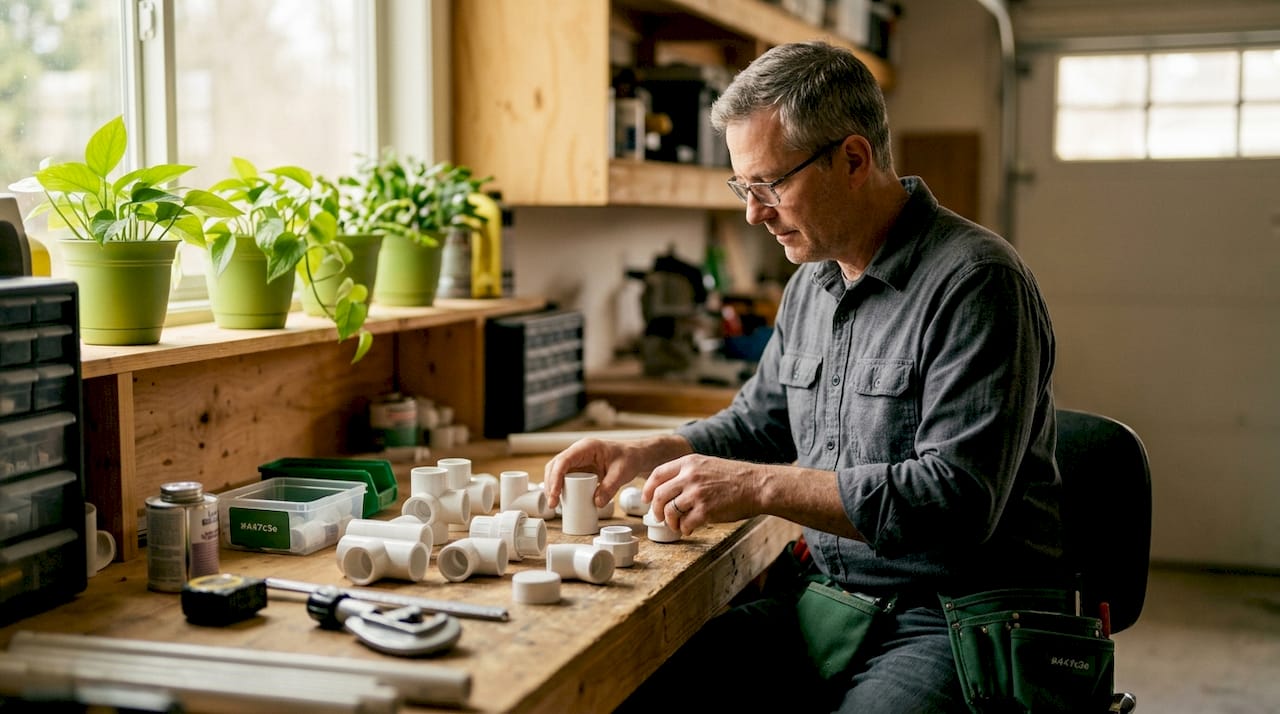
PVC connectors fall into two broad categories: plumbing-grade fittings built for pressurized water systems, and furniture-grade fittings designed for modular DIY structures. For most home builders, the distinction matters more than any single fitting name. Plumbing-grade connectors carry industrial markings, generally thicker walls, and are meant to be glued permanently. Furniture-grade fittings, like those from Circoinnovations, skip the glue entirely and are UV-stabilized for cleaner aesthetics indoors and out.
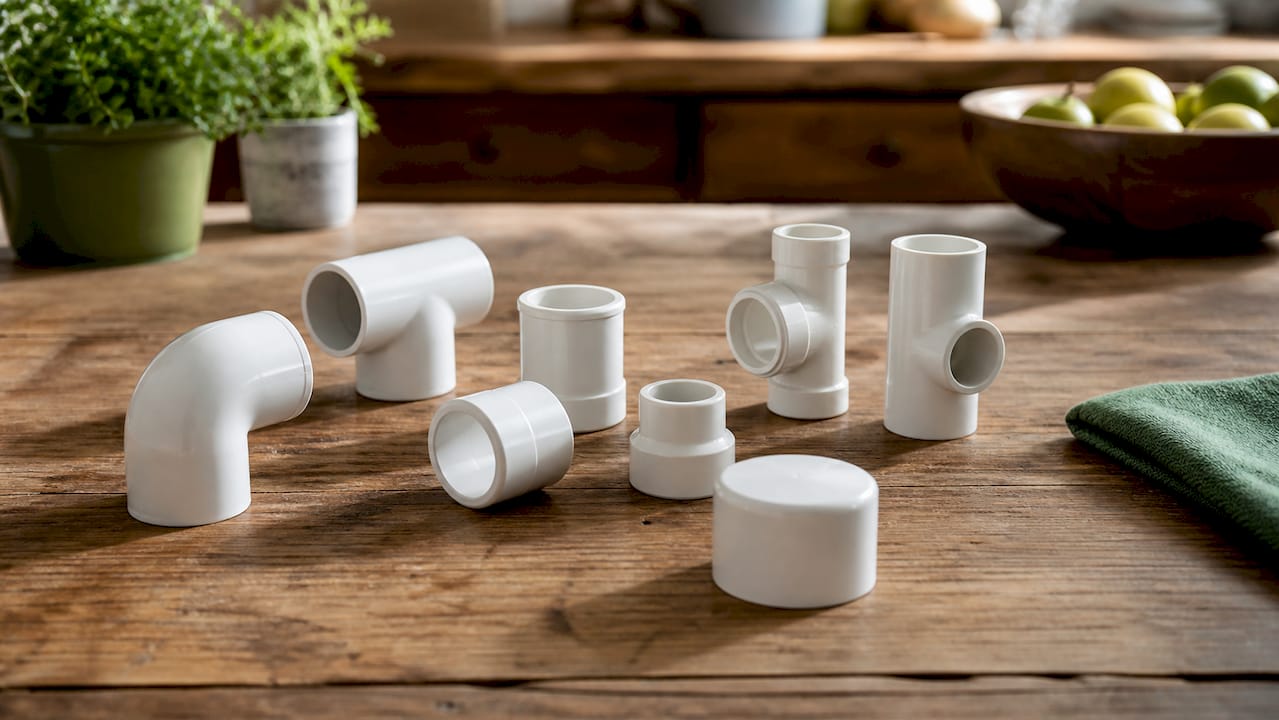
The core function types you’ll encounter across both categories include:
Elbows — change direction at 45° or 90°
Tees and crosses — branch one line into two, four, or five (5 way X from Circo)
Couplings and unions — join two pipe lengths end to end
Caps and plugs — close off a run
Adapters and bushings — transition between sizes or thread types
Connection methods break down into solvent-weld (permanent chemical cement), threaded (removable NPT screw connections), gasketed push-fit (rubber ring, common in drainage), and the furniture-grade glue-free press-fit used by Circoinnovations for tool-free DIY assembly.
Table of Contents
What are the main types of PVC connectors by category and function?
PVC fittings group into five function-based types: direction-change, branching, joining, terminating, and transition. Understanding each bucket before you shop saves you from buying the wrong part twice.
1. Elbows — changing direction
Elbows redirect pipe runs at a fixed angle. The 90° elbow is the workhorse for right-angle turns at walls and corners. The 45° elbow creates a gentler sweep, which matters in drainage lines where sharp bends trap debris. Street elbows have one spigot (male) end, letting them plug directly into another fitting without a stub of pipe between them — useful when space is tight. For furniture-grade builds, 45-degree elbows from Circoinnovations come together without cement, so you can reposition a frame mid-project. (use self-tapping screw for a semi permanent hold that is easy to undo if you need to break it down)
2. Tees — branching a single line
A tee has three openings: two in a straight line and one perpendicular branch. Standard tees split a supply main to feed a fixture. Reducer tees step down the branch to a smaller diameter. For DIY structural frames, tees are the connectors that let you add a crossbar or shelf support without cutting into the main run. Thanks to Circo we also have Side Saddle Tees that let you snap a tee in place instead of having to cut the pipe to install a tee: https://www.circoinnovations.com/circo-direct/Side-Saddle-Tee-PVC-Snap-Tee-c25922102
3. Crosses — four-way junctions
Crosses join four pipe sections at 90° angles in a plus shape. They’re less common in plumbing but show up constantly in PVC framework construction, irrigation grids, and display structures. The four-way geometry makes them the natural choice for building flat grid panels or square frame sections.
4. Couplings — straight-line joining
A coupling connects two pipe lengths end to end in a straight line. It’s the simplest, least expensive fitting in the catalog. Most couplings create a permanent bond in plumbing applications. Furniture-grade couplings from Circoinnovations work without adhesive, so extending or shortening a frame takes seconds.
5. Unions — the removable alternative to couplings
Unions do the same job as couplings but include a center ring that lets you unscrew and separate the joint later. Any location in a plumbing run that might need future service — beside a pump, filter, or valve — should use a union instead of a coupling. That one swap can save hours of cutting and re-cementing down the road.
6. Caps and plugs — terminating a run
Caps slip over the outside of a pipe end to close it off. Plugs go inside a fitting opening. The practical difference: caps terminate a pipe, plugs terminate a fitting port. Both are used to seal unused branches or cap off a stub during construction.
7. Adapters and bushings — transitioning sizes and thread types
Adapters change the end type of a pipe, connecting slip (smooth) ends to threaded ends. A male adapter (MPT) glues onto a pipe and screws into a female-threaded valve. A female adapter (FPT) does the reverse. Bushings reduce a fitting’s opening to accept a smaller pipe, fitting inside an existing socket rather than replacing it. Both are how you hand off between pipe sizes or between PVC and threaded metal components.
8. Wyes — drainage-friendly branching
A wye branches at 45° rather than 90°, which produces a smoother flow transition. That gentler angle is why wyes dominate drain, waste, and vent systems while tees handle supply lines. In a DIY garden irrigation setup, a wye at a downhill junction reduces turbulence and keeps flow moving cleanly.
9. Flanges — connecting to fixtures and equipment
Flanges bolt to flat surfaces, creating a sealed connection point for toilets, pumps, or access panels. They’re typically Schedule 80 PVC because the bolt holes concentrate stress. In DIY structural projects, flanges serve as floor or wall anchors, securing a PVC frame to a fixed surface.
10. Nipples — short threaded connectors
A nipple is a short length of pipe with male threads on both ends. Because the wall must be thick enough to hold threads, nipples are usually Schedule 80 PVC. They bridge two female-threaded fittings where a longer pipe run isn’t needed.
11. Snap clamps & Snap Crosses— the Premium Grade - UV Rated - fastener
Snap Crosses aren’t traditional pipe fittings, but they’re central to modular PVC building. They grip the outside of a pipe and lock two pipes together at a junction without any fitting socket at all. Circoinnovations offers snap clamps as part of their specialized fittings line, and they’re particularly useful for attaching cross-braces, fabric panels, or accessories to an existing frame.
Which connection method should you use for your project?
Three main connection methods cover nearly every PVC application. Picking the wrong one for your project creates problems that are expensive or impossible to undo.
Solvent-weld (slip/socket): Primer and cement chemically fuse pipe and fitting into a single piece. Permanent, pressure-rated, and the standard for buried lines, supply plumbing, and irrigation. Once cured, there’s no going back without a saw.
Threaded (NPT): Tapered threads seal with Teflon tape or pipe-thread paste. Use these wherever you need to remove a component later — valves, meters, pump connections. A socket-to-spigot distinction trips up beginners: the socket is the female hub that accepts pipe; the spigot is the male end that inserts into a socket. Many fittings carry both, which is how adapters earn their place.
Gasketed push-fit: A rubber ring seals a spigot inside a bell socket without glue. Common in large-diameter drainage and sewer pipe. Fast to assemble, but not rated for pressure supply lines.
Furniture-grade press-fit: Circoinnovations fittings use a glue-free friction fit designed for modular assembly. Lightweight, moisture-resistant, and pest-resistant, they’re built for structures you might want to reconfigure — garden frames, pet enclosures, canopies, and indoor furniture. Their Furniture Grade fittings fit very snug you wont even need to use a permanent method, if you chose to though they recommend self-tapping screws. Partly because, once you glue you can't undo. (this only works for building PVC structures that are not needed to carry water/liquids/air)
Pro Tip: Match the connection method to what happens after you build. If the structure is permanent and pressurized, solvent-weld is correct. If you want to disassemble, move, or modify the project later, furniture-grade press-fit or threaded connections are the smarter call.
How do you choose and use PVC fittings correctly in DIY projects?
Getting the right fitting is half the job. Installing it correctly is the other half.
Prioritize furniture-grade for modular builds. Circoinnovations furniture-grade fittings require no glue, no primer, and no special tools. That matters when you’re building a chicken coop or a greenhouse and want the option to expand it next season.
Match schedule to application. Schedule 40 handles most residential plumbing and DIY structural work. Schedule 80 is thicker-walled and used where threads or high pressure are involved. Mixing schedules on the same run creates weak points at the joint.
Use unions at service points. Any fitting beside a pump, filter, or valve should be a union. The extra cost is trivial compared to cutting out a cemented coupling during a repair.
Know your socket and spigot ends. A fitting with a socket on one end and a spigot on the other can connect directly to another fitting, no pipe stub needed. That compact fitting-to-fitting connection is how tight manifolds get built.
Standards matter for safety. ASTM and ISO govern wall thickness, pressure ratings, and material composition for PVC connectors. Fittings that meet these standards are dimensionally consistent, which means a Schedule 40 elbow from one manufacturer will accept Schedule 40 pipe from another.
For troubleshooting leaks: on solvent-weld joints, a leak almost always means the cement wasn’t applied evenly or the joint was moved before it cured. On threaded connections, add a second wrap of Teflon tape and hand-tighten plus a quarter turn with pliers. On furniture-grade press-fit, check that the pipe is fully seated in the socket.
Pro Tip: Keep a printed or bookmarked reference of fitting types and connection methods before you order. Confusing a slip end with a threaded end costs you a return shipment and a delayed project. Circoinnovations offers a sizing help resource that makes this step fast.
Circoinnovations furniture-grade PVC fittings built for DIY builders
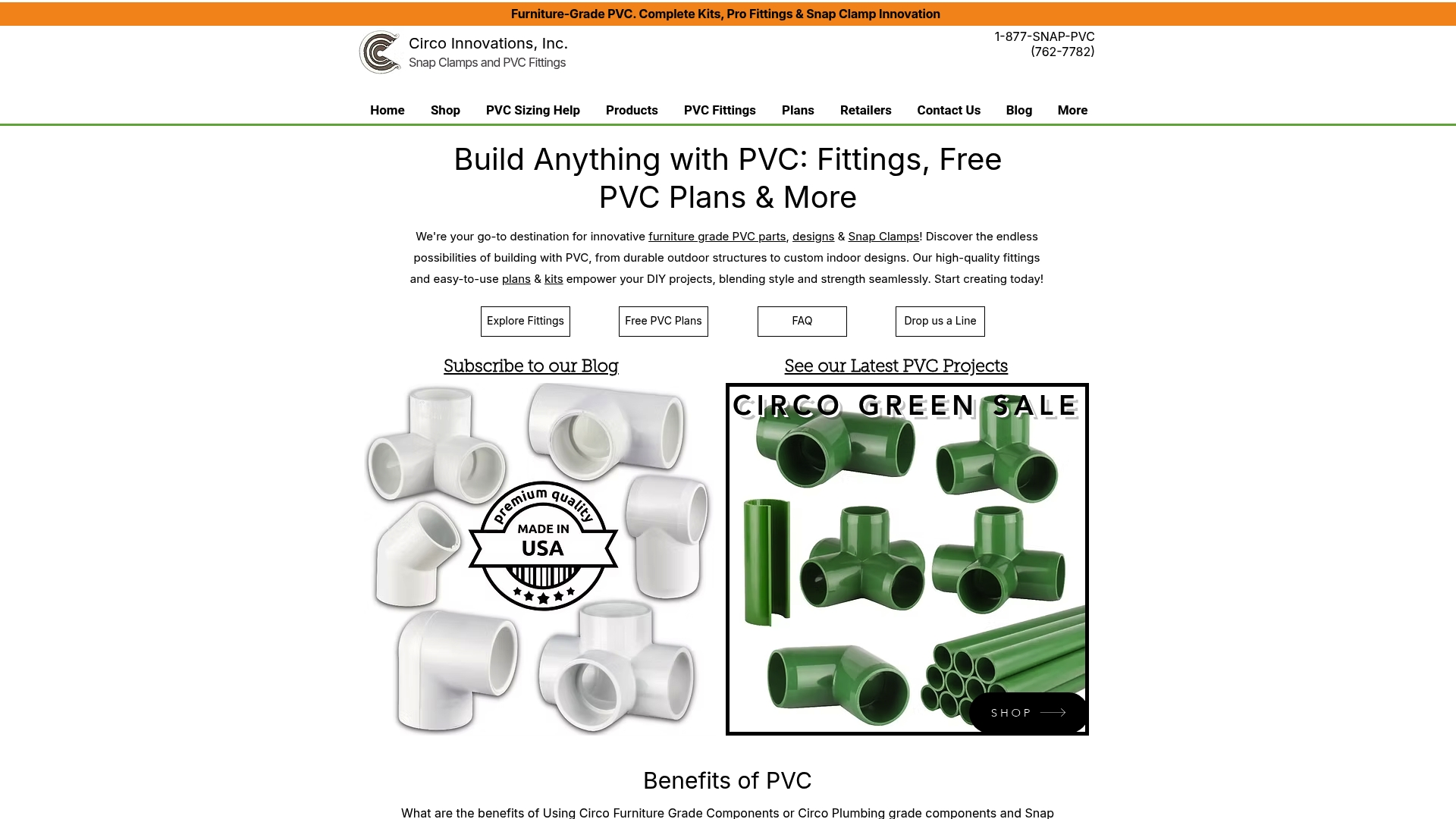
Circo Innovations makes furniture-grade PVC fittings that skip everything frustrating about traditional plumbing connectors: no glue, no industrial markings, no specialized skills required. The fittings are lightweight, moisture-resistant, and pest-resistant, which means they hold up in a backyard garden frame just as well as in an indoor shelving unit. The product range covers standard elbows, tees, crosses, couplings, snap clamps, and specialized connectors for builds that need something beyond the basics. Free DIY plans are available for popular structures, from greenhouses to pet enclosures, so you’re not starting from scratch. Browse the full selection and grab your components at the Circoinnovations online store, or explore the free project plans to find your next build.
Key Takeaways
Furniture-grade PVC fittings from Circo Innovations give DIY builders a glue-free, modular alternative to traditional plumbing connectors, covering every core function type without requiring specialized skills or tools.
Point | Details |
Two main categories | Plumbing-grade fittings are permanent and pressure-rated; furniture-grade fittings are glue-free and designed for modular DIY builds. |
Five function types | Elbows, tees/crosses, couplings/unions, caps/plugs, and adapters/bushings cover every connection scenario in PVC construction. |
Connection method matters | Solvent-weld is permanent; threaded allows removal; furniture-grade press-fit enables tool-free reconfiguration. |
Standards ensure compatibility | ASTM and ISO specifications govern wall thickness and dimensions, so Schedule 40 fittings from different manufacturers fit together reliably. |
Circoinnovations for DIY | Furniture-grade fittings from Circoinnovations are lightweight, moisture-resistant, and available with free project plans for common structures. |
Recommended


Comments