

Can a PVC Frame Hold a Greenhouse Film or Shade Cloth?

Yes. PVC works for most small-to-medium shade-cloth frames, provided you match pipe size to the span and brace the joints instead of relying on the plastic alone. Here’s the sizing rule to start with:
1/2" pipe for small low tunnels and single-bed covers
3/4" pipe for modest garden frames, roughly 4 to 6 feet wide
1" or furniture-grade PVC with braces for larger spans over 6 feet
Skip PVC entirely for very large canopies, locations with constant high wind, or any design where rain can pool on the fabric. In those cases, metal poles or treated wood handle permanent, high-load installations better than plastic ever will.
Key Takeaways
A PVC shade cloth frame holds up reliably when pipe size matches the span and every joint gets braced with a tee, cross, or snap clamp instead of relying on thicker pipe alone.
Point | Details |
Match pipe to span | Use 1/2" for low tunnels, 3/4" for standard beds, and 1" with bracing for spans over 6 feet. Even 1-1/4" for large structures like Circo's Large Carport |
Brace joints, not just pipe | Tees and cross fittings add more rigidity than upsizing pipe diameter alone. |
Space tie points correctly | Place Snap Clamps every 8 to 12 inches |
Slope the top for runoff | Prevent pooled rainwater from overloading flat frame sections. |
Upgrade fittings for durability | Circo Innovations’ furniture-grade tees, crosses, and snap clamps reduce joint movement in wind-exposed builds. |
Table of Contents
Materials and Tools for a PVC Shade Cloth Frame
Before cutting anything, get everything on the bench. A half-finished frame with mismatched fittings is how weekend projects turn into two-weekend projects.
Pipe: Standard schedule 40 PVC works for most builds, but furniture-grade PVC costs a bit more and resists UV breakdown noticeably longer. Electrical conduit is thinner-walled and cheaper, but it flexes more under load than schedule 40 pipe of the same diameter.
Fittings: Tees and crosses aren’t optional extras. They’re what turns a wobbly rectangle into a rigid frame, since a right-angle joint held only by a coupling will rack under wind load. Tee fittings let you add a mid-span brace without cutting into your main rails, and snap clamps hold pipe under tension without needing glue.
Shade cloth: Density is measured by the percentage of light it blocks. Cooler regions often do fine with 30% shade cloth, while hotter southern gardens usually need closer to 50%. Heavier fabric weighs more and catches more wind, so factor that into your pipe choice before you order.
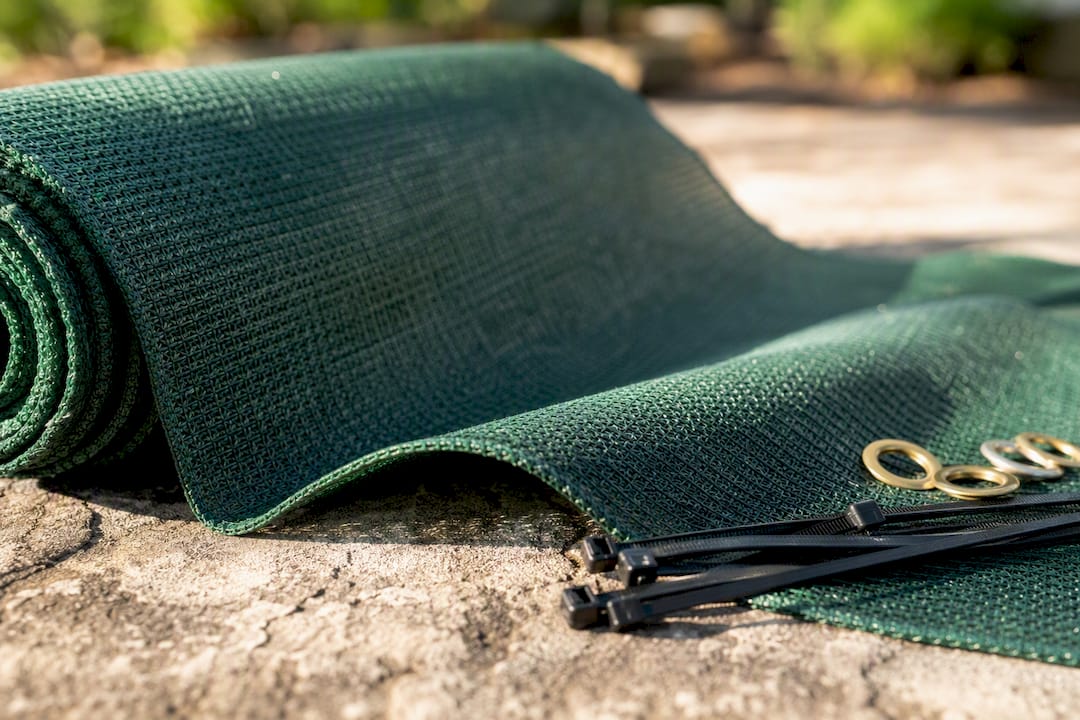
Fasteners: UV-rated zip ties, Circo snap clamps, brass grommets, lacing cord, and rebar or garden stakes for anchoring. A few optional guy lines add real stability on windy sites.
PVC is cheap, and having spare tees on hand saves a second store trip when a joint needs adjusting mid-build.*
Which Frame Shape Fits Your Space?
Not every garden needs the same skeleton. The shape you pick should follow your span, not the other way around.
Rectangular box frames suit raised beds and defined planting areas up to about 6 feet wide. Four corners, four uprights, and a flat top rail make this the easiest first build.

Low tunnels (hoops) work well over rows of vegetables. Curved PVC distributes load more evenly than a flat top, which is why hoop houses hold up in moderate wind better than flat-roofed frames of the same pipe size.
X-frames brace themselves diagonally, which suits taller structures like trellises or pergola-style shade where lateral sway is the real enemy.
Arched canopies cover the most ground per pipe but need a tee or cross fitting bracing the peak, or the arch will flatten under fabric tension over time.
Cross-bracing beats upsizing pipe almost every time. Adding a tee fitting or a cross-member increases rigidity far more cost-effectively than jumping from 3/4" to 1" pipe, and it weighs less too. As a rough rule, add a mid-span support every 4 to 5 feet on horizontal rails longer than that. Anchoring depends on permanence: rebar driven into soil suits removable seasonal frames, while concrete footings make sense for a structure you’re never taking down.
Pro Tip: If you’re on the fence between 3/4" and 1" pipe, buy the smaller size and add one extra brace instead. You’ll spend less and end up with a stiffer frame.
How to Build a Rectangular PVC Shade Frame Step by Step
Here’s a sample build for a 6 foot by 4 foot bed cover, the size that fits most raised garden beds.
Planning first:
Measure the bed and add 6 to 12 inches of shade cloth overlap on each side for secure fastening, since extra fabric at the edges gives you room to hem or grommet without cutting it too tight.
Space uprights every 3 to 6 feet depending on wind exposure. Tighter spacing in open, breezy yards.
Mark grommet placement on the cloth before you cut any pipe, so the frame and the fabric line up.
Cutting and dry-fitting:
Cut two long rails and two short rails to your bed dimensions using a PVC cutter or hacksaw.
Connect the four corners with elbow or tee fittings, depending on whether you need a leg extending downward at that corner.
Dry-fit the whole frame without snapping anything permanently. Check it sits square before committing.
Add mid-span cross members using cross fittings if your rail exceeds 5 feet, then snap everything into place.
Anchoring:
For removable frames, drive rebar stakes about 12 inches into the soil and slide the upright pipe directly over them.
For semi-permanent installs, set the uprights in small concrete footings.
Add guy lines anchored to ground stakes on any corner facing prevailing wind.
Finishing up: Attach the shade cloth, tension it evenly across all sides so no single point takes the load, and trim excess fabric once everything is snug. Walk the frame after the first heavy storm or wind event and re-check every fastener.
Attaching and Tensioning Shade Cloth Without Tearing It
The frame is only half the job. A poorly tensioned cloth will sag, flap, and eventually rip at the weakest grommet.
Best fasteners: Snap Clamps are the best option, they don't tear the shade cloth and they can be used without needing grommets or holes.
Spacing: Place a Snap Clamp every 8 to 12 inches along the edge.
Leave slack: PVC and shade cloth both expand slightly in heat. Tension the fabric snug but not drum-tight, then recheck after the first hot afternoon.
Fixing Wind, Bending, and Joint Failures Before They Happen
Wind and pooled rainwater, and snow are the types of forces that actually break PVC shade structures, not the sun. A flat top panel that traps rainwater can add real weight fast, and that same flat geometry catches wind like a sail. Slope the top slightly, even a couple of inches over a 6 foot span, so water runs off instead of collecting.
Common fixes when a frame starts flexing:
Add a cross brace at the point of movement rather than replacing the whole rail.
Shorten the unsupported span by adding one more upright.
Stake guy lines on the windward side.
Swap standard couplings for snap clamps at joints that see repeated stress.
Community builders testing similar setups report that 1" PVC can support small canopies successfully, but only with proper bracing and anchoring — span and wind exposure matter more than pipe diameter alone. If you’re seeing repeated bending, cracked fittings, or joints that shift every time the wind picks up, that’s your signal to upgrade to conduit or steel posts rather than adding a fourth brace to a frame that’s already maxed out. Walk your structure after every storm and check joints for hairline stress cracks.
Why Fitting Choice Matters More Than Pipe Size
Circo Innovations builds furniture-grade fittings specifically for projects like this, where a glued PVC joint just doesn’t cut it under repeated wind load. Snap clamps and tee fittings let you assemble a rigid frame without glue, and take it apart again if your garden layout changes next season.
Furniture-grade material resists UV degradation longer than standard schedule 40 fittings from a hardware store bin.
Fitting Type | Best Use |
Tee | Mid-span bracing on rectangular frames |
Cross | Orthogonal reinforcement on wider spans |
Snap clamp | High-tension joints exposed to wind |
What the Conventional Advice Gets Wrong
Most PVC shade tutorials treat pipe diameter as the main lever. Bigger pipe, stronger frame, done. That logic isn’t wrong exactly, it’s just incomplete, and it leads a lot of first-time builders to overspend on 1" pipe when a well-braced 3/4" frame would have done the job for less money and less weight.
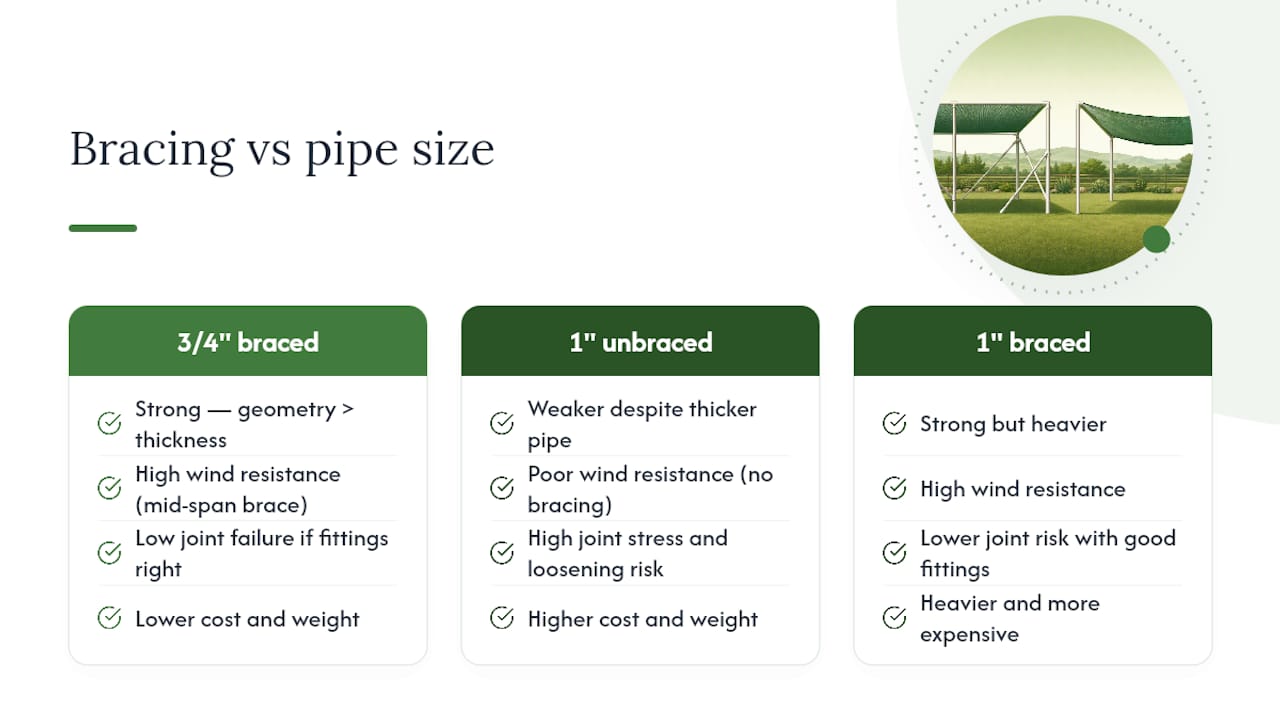
Geometry does more work than material thickness. A rectangular frame with a single mid-span cross fitting resists wind sway better than the same frame in thicker pipe with no bracing at all. That’s not a minor tweak, it’s the actual difference between a frame that survives its first storm and one that doesn’t.
The other blind spot is joint quality. Standard slip couplings loosen under repeated flex, and once one joint starts moving, it transfers stress to the next one down the line. Beginners fixate on pipe schedule and forget that the weakest link in most failed frames is the connection, not the tube. Get the fittings right first. The pipe size is the easy decision; the bracing plan is where the real engineering happens.
Get Fittings Built for This Exact Project
Standard hardware store tees and couplings work, until they don’t. Circo Innovations makes furniture-grade PVC fittings and snap clamps designed specifically for load-bearing DIY structures like shade frames, so joints hold their shape through a full season of wind instead of loosening by midsummer.
If you’d rather skip the trial-and-error sizing debate entirely, Circo Innovations’ pre-packaged kits bundle the fittings and parts list for common builds, tested combinations instead of guesswork with a tape measure. Browse the full fittings catalog for tees, crosses, and snap clamps, or check the free plans if you want a proven layout before you buy a single pipe. Order your fittings today and start building a frame that outlasts the season.
Frequently Asked Questions
What size PVC pipe is best for a shade cloth frame? Use 1/2" pipe for small low tunnels, 3/4" for most garden bed frames, and 1" pipe with cross-bracing for spans wider than 6 feet.
How do you attach shade cloth to PVC pipe? UV-rated zip ties, snap clamps, and carabiners through grommets all work well. Space attachment points every 8 to 12 inches and leave slight slack for heat expansion.
Do I need to glue PVC fittings for a shade frame? No. Snap clamps and furniture-grade fittings hold pipe securely without glue, which also makes the frame easier to take apart or resize later.
What shade cloth percentage should I use? Cooler climates typically do well with 30% shade cloth, while hotter regions often need 50% for adequate plant protection.
When should I use metal instead of PVC? Switch to metal poles or treated wood for very large spans, permanent installations, or sites with constant high wind, where PVC alone won’t hold up long term.
Sources
Recommended


Comments