

How to Paint PVC Pipe for a Durable, Pro Finish
How to paint PVC pipe: the quick answer
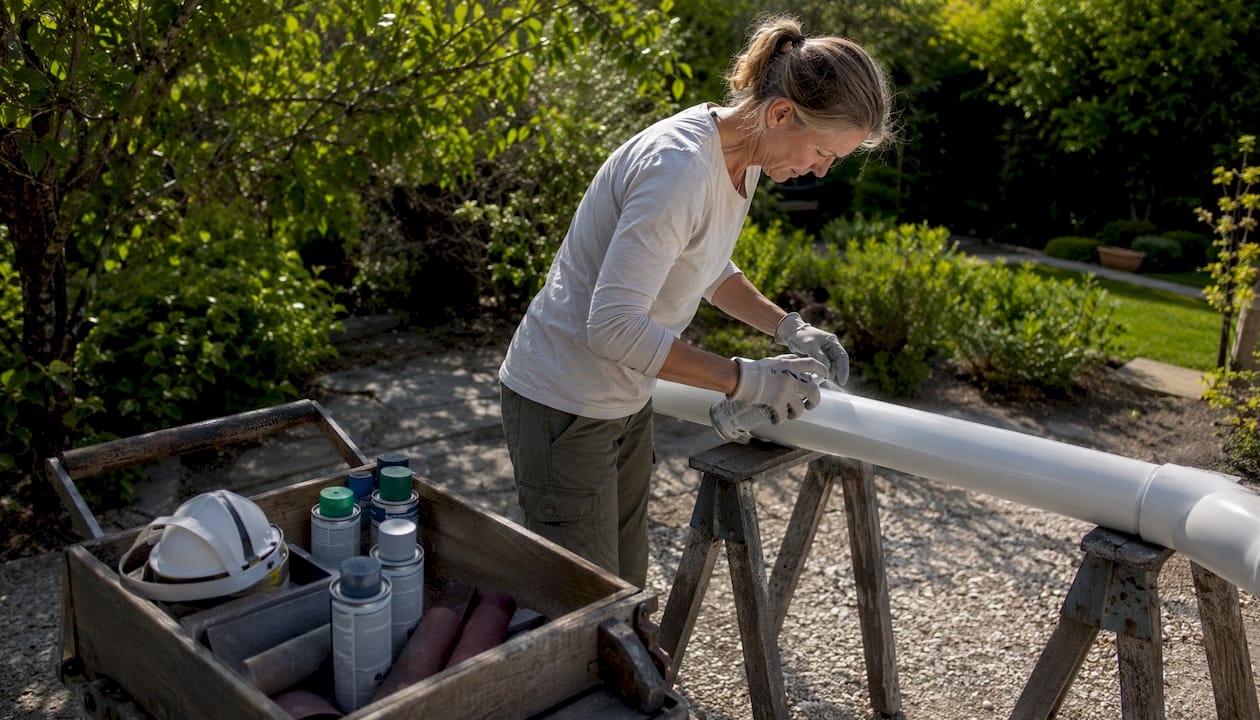
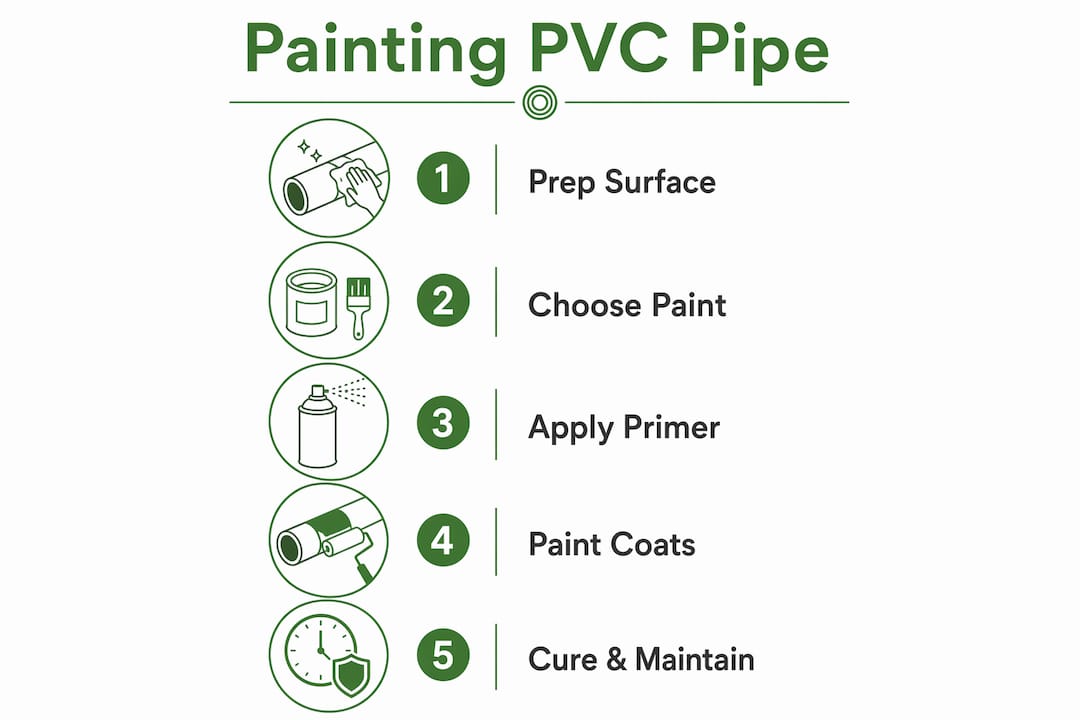
Yes, you can absolutely paint PVC pipe, and it holds up well when you do it right. The short version: lightly sand with 220-grit sandpaper, wipe down with acetone, and use a spray paint formulated for plastic. That combination gives paint something to grip on a surface that would otherwise repel it.
Here’s the fast-start checklist before you dive into the details:
Sand the pipe with 220-grit sandpaper in multiple directions to remove the glossy finish
Clean with acetone and let it dry 20–30 minutes before painting
Use plastic-rated spray paint like Krylon Fusion All-In-One or Rust-Oleum Universal Spray Paint
For hand painting, apply a matte white plastic primer first
Apply multiple thin coats, waiting 20–30 minutes between each
Allow full curing: at least 24 hours before handling
Use flexible paints or primers if your PVC bends or flexes
Why paint PVC pipe at all?
Most PVC pipe comes in white or gray. That’s fine for a basement utility run, but not for a garden trellis, a furniture frame, or a decorative structure you actually want to look at. Painting lets you match your project to its surroundings or give it a completely different character, like the wood-grain or metallic finishes that make PVC builds look far more polished than the raw material suggests.
There’s a practical case too. UV exposure causes unpainted PVC to discolor and chalk over time. A coat of UV-resistant paint protects the surface and keeps it looking clean for years. For anything going outdoors, that protection is worth the prep time alone.
Preparing your PVC surface before painting
Good prep is what separates a paint job that lasts years from one that peels in weeks. Skip it, and even the best plastic-rated paint will fail.
Put on chemical-resistant gloves. Acetone dissolves latex gloves, so choose gloves rated for solvent exposure before you open the bottle.
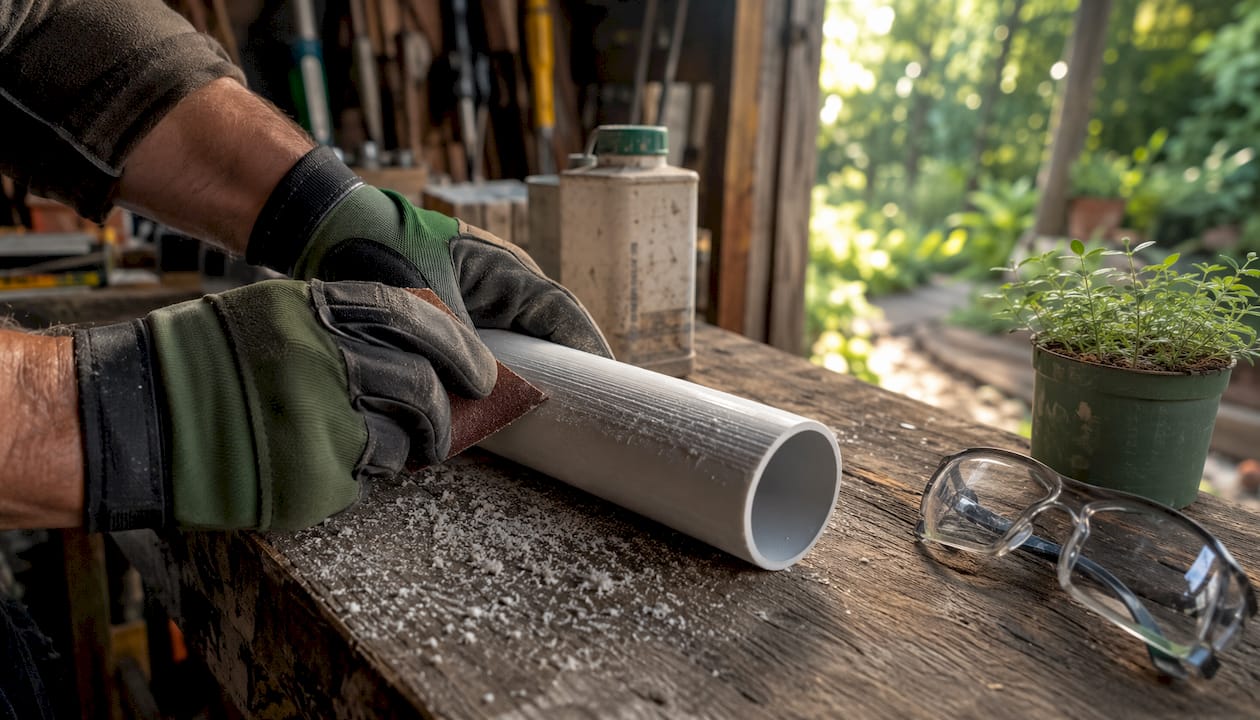
Sand with 220-grit sandpaper by hand. Work in multiple directions to avoid grooves. Avoid electric sanders, which remove too much material too fast and can weaken the pipe.
Wipe down with acetone. Acetone cleans off oils and residue while slightly swelling the PVC surface, making it more porous. Let it dry fully before moving on.
Protect your workspace. Lay down drop cloths or plastic sheeting. Overspray travels farther than you expect.
Set up your pipes for even access. Short sections can stand upright in a cardboard box. For longer pipes, lean them against cardboard at an angle so you can rotate them without touching wet paint.
Pro Tip: Keep fresh sheets of sandpaper nearby. The waxes in PVC gum up sandpaper quickly, and a clogged sheet stops cutting and starts sliding.
Choosing the right paint for PVC pipe
Paint selection is where most DIYers go wrong. Standard wall paint, interior latex, and oil-based formulas all fail on bare PVC without serious prep. The surface is too smooth and non-porous for them to grip.
The paint options that actually work:
Plastic-rated spray paints like Krylon Fusion All-In-One or Rust-Oleum Universal Spray Paint bond directly to PVC using built-in adhesion promoters. No separate primer needed for most applications.
Solvent-based epoxy sprays offer the strongest durability for outdoor pipes or high-traffic builds. They resist chemicals and weather well.
Acrylic latex paint works on rigid PVC but requires a plastic primer first. Without it, peeling is almost guaranteed.
Vinyl-specific paints are the right call for flexible PVC. They stretch with the material instead of cracking.
Matte and satin finishes hide surface imperfections better than gloss. Gloss paint amplifies every texture irregularity, which matters on a pipe that was never meant to be a showpiece.
Pro Tip: Plastic-specific spray paints with built-in adhesion promoters simplify the whole process. They skip the primer step and still bond reliably to PVC, making them the go-to choice for most DIY projects.
How to paint PVC pipe: step-by-step techniques
With your surface prepped and paint chosen, the application itself is straightforward. The main rule: thin coats, every time.
Shake the spray can vigorously for 15–30 seconds before starting
Hold the can 8–12 inches from the surface and use steady side-to-side sweeping passes
Start at the top and work downward in overlapping horizontal passes to avoid runs
Apply thin, consistent coats rather than one heavy coat. Heavy application causes drips and uneven curing
Wait 20–30 minutes between coats, then rotate the pipe to reach unpainted sides
Most PVC jobs need multiple thin coats to reach true color saturation.
For hand painting, use a synthetic bristle brush in long, smooth strokes from end to end. Synthetic bristles resist stiffening from plastic-rated paints better than natural fiber brushes
Allow full curing of at least 24 hours before handling. For outdoor installs or anything that will face scratching, wait up to a week
Paint in moderate temperatures with low humidity. Cold or damp conditions compromise adhesion and slow curing unpredictably.
How to make your paint job last on PVC pipe
A well-done paint job on outdoor PVC can last several years with basic upkeep. Here’s what keeps it there:
Use flexible paint formulations on any PVC that expands, contracts, or flexes. Rigid-surface paint on flexible PVC leads to spiderweb cracking
Never rush drying or pile on thick coats. Both cause peeling and runs
Clean painted pipes gently with a water-dampened cloth. Avoid abrasive scrubbers
Apply a clear polyurethane or waterproofer over the topcoat for extra weather protection
Repaint when you see chalking or peeling starting. Catching it early means less stripping work
Build better with Circoinnovations PVC fittings and kits

Painting is only part of the picture. The quality of your PVC components matters just as much as the finish on them. Circoinnovations specializes in furniture-grade PVC fittings designed for DIY builds that actually hold up, from garden structures and pet enclosures to custom furniture and outdoor frames.
Their components include snap clamps, internal caps, elbows, and specialized connectors, all built to fit together without glue. The material is lightweight, moisture-resistant, and pest-resistant, which makes it a natural fit for both indoor and outdoor projects. Circoinnovations also offers free detailed project plans so you can go from idea to finished build without guessing at dimensions or assembly order.
Safety precautions and ventilation when painting PVC pipe
Spray paint fumes and acetone vapors are not something to take lightly. Work in a well-ventilated space, ideally a garage with doors and windows open, or outdoors on a calm day. A basement with no airflow is a bad choice regardless of how convenient it seems.
Wear a respirator or ventilated mask rated for organic vapors, not just a dust mask. Goggles protect your eyes from overspray. Keep acetone away from heat sources and open flames since it is highly flammable. Wash your hands thoroughly after handling solvents, even if you wore gloves.
Common mistakes to avoid when painting PVC pipe
Most paint failures on PVC trace back to one of a handful of avoidable errors.
Skipping surface prep. This is the biggest one. Paint on unsanded, uncleaned PVC peels within weeks. The glossy factory finish gives paint nothing to grip.
Using the wrong paint. Standard wall paint or oil-based paint on bare PVC will not bond. Always use plastic-rated formulas or pair conventional paints with a proper plastic primer.
Applying coats that are too thick. One heavy coat looks tempting but leads to drips, uneven texture, and a finish that never fully cures. Thin coats win every time.
Painting in the wrong conditions. High humidity or temperatures outside the 50–85°F window cause adhesion problems that show up days later, not immediately.
Rushing the cure. Touching or installing painted PVC before it fully cures leaves fingerprints, scuffs, and soft spots in the finish.
Post-painting care and maintenance to preserve your finish
Once the paint has fully cured, maintenance is minimal. Wipe painted pipes down with a damp cloth when they get dirty. Avoid harsh chemical cleaners or abrasive pads, both of which wear through the topcoat faster than weather does.
For outdoor builds, inspect the finish once a year. Look for chalking, fading, or any spots where the paint is starting to lift. A light sanding and a fresh coat over problem areas extends the life of the whole paint job without requiring a full strip and repaint. Storing painted PVC away from sharp tools or abrasive contact during off-season storage also prevents unnecessary wear.
Key Takeaways
Properly painted PVC pipe requires plastic-rated paint, thorough surface prep with 220-grit sandpaper and acetone, and multiple thin coats with full curing time for a finish that lasts.
Point | Details |
Surface prep is non-negotiable | Sand with 220-grit paper and wipe with acetone before any paint touches the pipe. |
Use plastic-rated paint | Krylon Fusion All-In-One and Rust-Oleum Universal bond directly to PVC without a separate primer. |
Thin coats, not thick ones | Apply multiple light coats with 20–30 minutes drying between each to avoid drips and peeling. |
Cure before handling | Allow at least 24 hours before use; outdoor installs benefit from up to a full week. |
Outdoor paint can last several years | UV-resistant paint and annual touch-ups keep the finish intact through weather and temperature swings. |
Recommended
Happy Building!


Comments